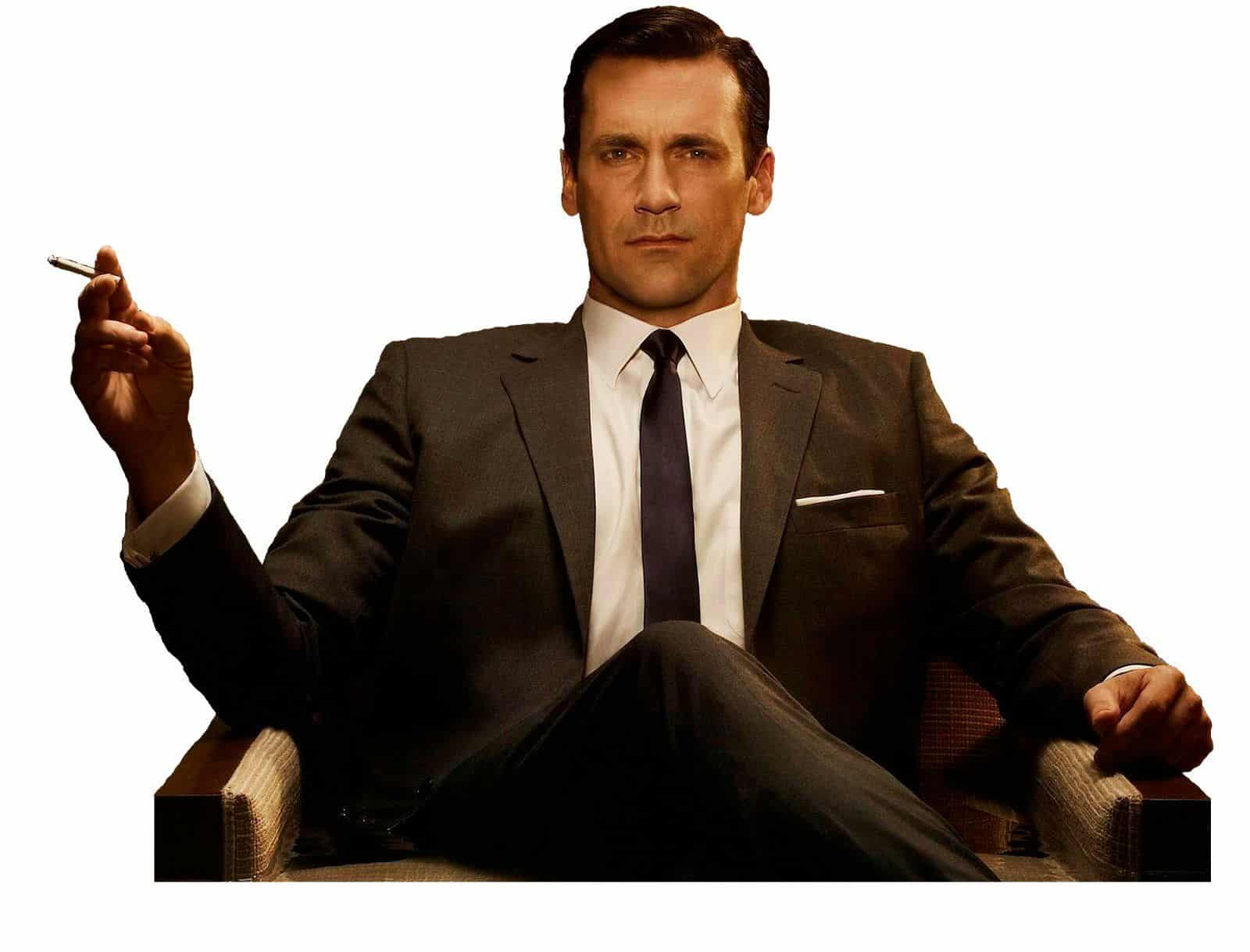
Your finger is hovering over the ‘Mute’ button, a small plastic sanctuary that allows you to cough, sigh, or scream without the board members hearing the tectonic plates of your personal life shifting. On the screen, you are a masterclass in executive presence. Your lighting is soft, your posture suggests a lean-in mentality, and your background is a curated shelf of books you haven’t opened in 13 months. But just six inches to the left, out of the camera’s deceptive frame, sits an empty bottle of Pinot Grigio from last night, its label mocking the ‘Standard of Excellence’ award sitting on your desk. You are leading this Monday morning stand-up with the precision of a watchmaker, even though your hands are shaking with a frequency only you can feel. It is a terrifyingly effective performance. You’ve become so good at being ‘fine’ that the lie has started to feel like the only thing keeping the roof from collapsing.
Insight: The Cognitive Load
We talk a lot about burnout, but we rarely talk about the specific, agonizing labor of pretending you aren’t burning. This performance of being okay is actually more exhausting than the work itself. It is a psychological tax that compounds daily, and most of us are paying 43 percent of our cognitive load just to maintain the facade.
I spent an hour this morning writing a paragraph about the historical roots of the word ‘professionalism’ as a tool of suppression, but I deleted it. It felt too clean, too distant. The truth is messier: we are terrified that if the mask slips, our value evaporates.
Miles: Perfection as a Shield
Consider Miles J.-P., a typeface designer I know who works out of a studio that smells faintly of expensive cedar and repressed terror. Miles is a man who obsesses over the terminal of a lowercase ‘f’ for 23 hours straight. He is a perfectionist not because he loves the art-though he does-but because the perfectionism is a shield. If the kerning is perfect, then he must be perfect. If the 153 glyphs in his latest font, Onyx-13, align with mathematical certainty, then surely his life isn’t actually a series of missed appointments and secret drinks in the afternoon.
The Fixation on Control (Miles’ Expenditure)
Miles told me once that he spent $373 on a specific ergonomic mouse because he thought if his wrist stopped hurting, he might stop wanting to disappear. It didn’t work.
Miles represents the quiet tragedy of the modern professional. We have turned our identities into brands, and brands don’t have bad days. Brands don’t have substance use issues. Brands don’t wake up at 3:13 AM with a heart rate like a hummingbird’s, wondering when the authorities of ‘Real Life’ are going to show up and revoke their credentials. This performance erodes the core of who we are. When you spend 8 to 10 hours a day lying with your body language, you lose the ability to tell the truth to yourself. Authenticity becomes a buzzword you put in a PowerPoint, not a state of being. You become a character in a play that never has an intermission, and eventually, the character is all that’s left. This isolation is profound because you are surrounded by people who ‘know’ you, yet none of them have ever met the person sitting behind the camera lens.
The performance of wellness is the most effective barrier to actual well-being.
We reward this. We promote the person who ‘never lets things get to them,’ unaware that they are simply better at burying the evidence. This culture creates a feedback loop where vulnerability is seen as a liability rather than a prerequisite for health. You look at your colleagues and assume they are actually as composed as they appear, which only heightens your own sense of shame. You are the only one struggling, you think. You are the only one who needs a drink to stop the buzzing in your ears after a 63-minute client call. But the reality is that half the people on that Zoom call are likely managing their own quiet catastrophes. We are all just actors on different stages, reading from the same script of ‘I’m doing great, thanks for asking.’
The Crushing Weight of Success
This is where the erosion of trust begins. If I cannot trust you to be honest about your struggles, how can I trust you to be honest about the project’s risks? If our entire professional relationship is built on a mutual agreement to ignore the obvious signs of distress, we aren’t a team; we are just a collection of silos.
The Breaking Point: Success as Failure
Fog of Self-Medication
Crushing Fraudulence
For Miles J.-P., the breaking point didn’t come during a massive failure. It came during a success. He won a prestigious design award for a project he barely remembered finishing because he had been so deep in a fog of exhaustion and self-medication. Standing on that stage, receiving a glass trophy in front of 213 of his peers, he felt nothing but a crushing sense of fraudulence. The performance had worked too well. He had won, but the person who won wasn’t him.
The danger of being ‘high-functioning’ is that no one thinks you need help until you stop functioning entirely. We wait for the spectacular crash-the public meltdown, the missed deadline, the HR nightmare-before we acknowledge that something is wrong. But the crash is happening every day in the small, quiet moments. It’s in the way you avoid eye contact with your spouse. It’s in the way you’ve calculated that you have exactly 3 minutes to compose yourself between meetings. It’s in the way your ‘wellness’ routine has become just another set of tasks to perform for an invisible audience.
The Path to Reclaiming Self
Breaking this cycle requires a radical act of honesty, one that is often too scary to perform within the walls of the office. You need a space where the ‘Standard of Excellence’ doesn’t apply, where you aren’t a typeface designer or a project manager or a CEO. You need a place where the empty wine bottles and the shaking hands can be acknowledged without the fear of losing your career.
Sanctuary is Strength
Finding that space is not a sign of weakness; it is the first moment of actual strength you’ve shown in years because it is the first moment you’ve stopped acting. For those who have reached the end of their script, seeking a discreet and dignified path toward recovery is the only way to reclaim the identity that the performance has stolen. Places like
New Beginnings Recovery offer that specific kind of sanctuary, where the goal isn’t to fix the ‘brand’ of you, but to heal the actual human being underneath it. It’s about learning how to exist without the armor, even if that armor is what you’ve used to build your entire life.
I often think about the 433 anchor points Miles used to draw a single capital ‘S’. He was trying to control the curve, to make it smooth and unbreakable. But life isn’t a vector graphic. It’s hand-drawn, it’s shaky, and it’s full of ink blots. When we try to live our lives with the precision of a digital font, we lose the texture that makes us real. We become beautiful, perhaps, but we are also cold and brittle. The performance of being fine is a cage made of gold, but it is still a cage. You can keep smiling through the meetings, you can keep hitting your KPIs, and you can keep hiding the evidence, but eventually, the weight of the lie will become heavier than the truth ever was.
Success is a hollow victory if you aren’t present to feel it.
We need to stop asking people how they are doing if we aren’t prepared to hear a complicated answer. And more importantly, we need to stop telling ourselves we are doing great when we are actually drowning in 3 feet of water. The water doesn’t have to be deep to kill you; you just have to be unable to stand up.
If you are reading this while muted on a conference call, pretending to take notes while actually staring at your own reflection in the black glass of your phone, know that the performance is optional. You can walk off the stage. The world won’t end if you admit you’re struggling, but your life might actually begin. We are more than our capacity to endure discomfort in silence. We are more than our output. And we are certainly more than the curated versions of ourselves that we project into a grid of 13 tiny boxes on a Monday morning. The most professional thing you can ever do is admit when you are no longer able to do it alone.